How to Create Content That Makes People Want More (Without Being Salesy)
Have you ever created a genuinely helpful content piece—but somehow it left your audience with nowhere to go? 😬
You answered their question. You shared useful tips. You gave away valuable information.
And yet, the content didn't lead to a conversation, a signup, an inquiry, or a sale.
There's a reason that happens...
Helpful content gives people information.
But information alone doesn't create action.
For that, you need “yearning.”
Yearning is the emotional pull that helps your audience imagine what's possible on the other side of the problem you're helping them solve.
It creates anticipation and desire without resorting to pressure, manipulation, or aggressive sales tactics.
It's also the fourth element of my SONYA Framework™, a human-first approach to creating content that hooks, connects, and converts.
In my companion YouTube video, I dive deeper into how yearning can move readers from simply being interested to taking meaningful action. Discover more here:

Now, let’s get into today’s topic!
Table of Contents
Why Helpful Content Doesn't Always Convert
Let's clear up one misconception first:
If your content isn't converting, it doesn't necessarily mean it isn't valuable.
In fact, it may be extremely valuable.
The problem is that education and action aren't always the same thing.
Imagine being an art coach for artists starting their own business, and someone reads your article about building an online presence.
They learn how to improve their website, why email marketing matters, and how to create better social media content.
Then they close the browser.
They've gained information—but they haven't imagined what could change if they put that information into practice.
That's the gap yearning helps bridge!
Consumer trust remains closely tied to whether people believe businesses understand their concerns, show empathy, and provide meaningful direction.
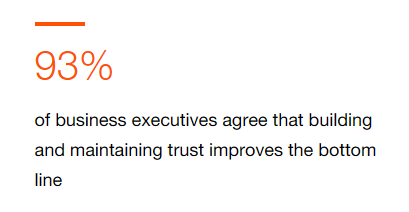
So content that combines helpful information with a clear sense of possibility is key to making advice feel more relevant and actionable.
What Yearning Really Means in Marketing
The word "yearning" may sound a little dramatic when talking about marketing.
But it's actually quite simple.
Yearning is the desire for a better outcome.
It's the moment your audience thinks:
"I want that."
"I want to feel that way."
"I want this solution to my current problem."
“I want this person’s help because I trust them.”
You don’t manufacture that desire; you recognize a desire they already have and make it achievable.

Again, yearning isn't manipulation.
There's an important distinction here…
Manipulative marketing creates anxiety (or FOMO) to position your product as the only escape.
Ethical marketing, instead, helps people understand their current situation, shows them a realistic possibility for improvement, and gives them the information and choice they need to decide what to do next.
This difference matters!
Persuasive communication is effective when it supports users' goals rather than relying on deceptive or coercive techniques.
Meaning, your job isn't to pressure someone into wanting your offer.
It's to help the right person recognize why the outcome you provide benefits them.
Y: Yearning in the SONYA Framework™
Yearning is the fourth element of my SONYA Framework™:
Strategy.
Originality.
Nuance.
Yearning.
Authenticity.
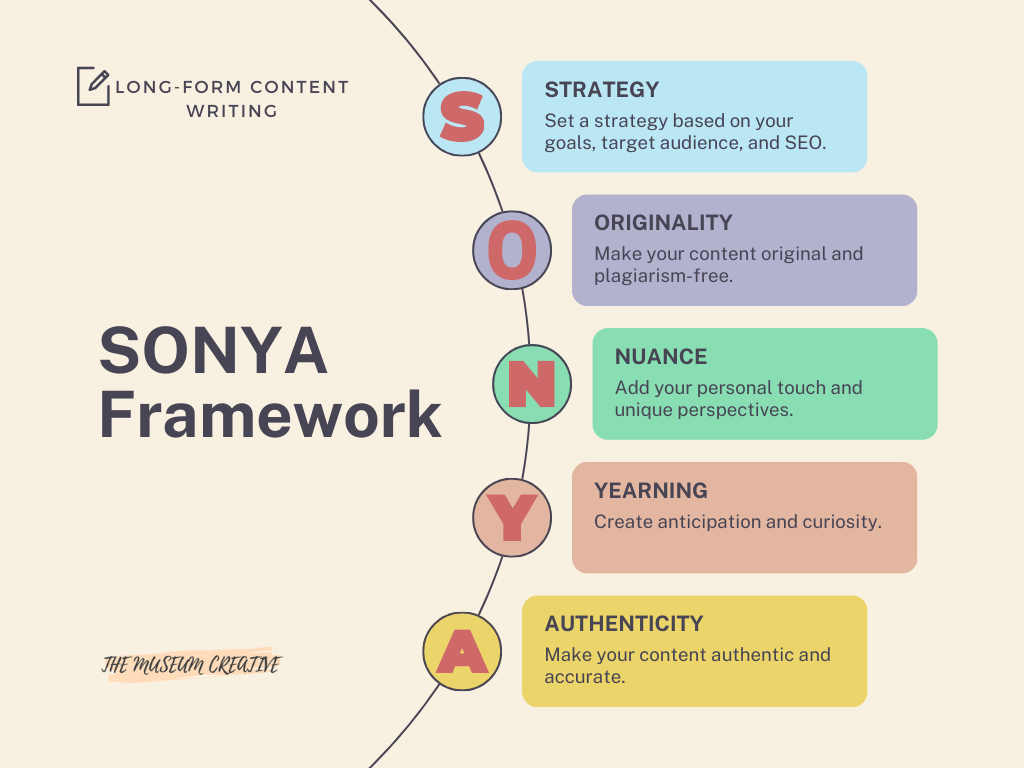
Each element has a different role:
Strategy gives your content direction.
Originality gives it a distinctive perspective.
Nuance adds depth and context.
Yearning creates emotional movement.
Authenticity builds trust.
Without yearning, even excellent educational content feels static.
With it, your audience sees themselves moving from where they’re now to where they want to be.
They see the transformative outcome ahead.
1. Show Your Audience What's Possible
One of the easiest ways to create yearning is to stop talking solely about the problem.
Show the possibility on the other side.
In my case, for example, I wouldn’t simply say: "You're overwhelmed by content creation."
I’d put things in perspective through an emotional lens: "Imagine opening your content calendar and already knowing what you want to say, who you're speaking to, and why that content matters to your business."
The second statement gives the reader somewhere to go; it creates a clear, tangible picture they can aspire to.
Think about what changes when your audience solves the problem you're addressing.
Maybe they:
Feel more confident.
Save time.
Stop second-guessing their work.
Fulfill their needs/aspirations.
Are satisfied and uplifted.
These aren't mere features or tactics.
They're outcomes with an emotional relevance.
2. Help Readers See the Transformation
A transformation doesn't have to be dramatic, though.
Realistic transformations are a more persuasive way to move your audience forward.
Let’s say you’re an exhibition consultant assisting archaeological museums.
Instead of promising: "Double your visitor attendance in 30 days."
Show a believable shift: "Go from lacking consistent visits to having a clear set of enticing archaeological exhibits that fully meet your audience's interests and your museum’s goals."
That's specific, achievable, and invites the audience to visually experience the change!
Understanding consumer needs and decision-making moments when delivering valuable content is crucial because your audience doesn’t just wonder what your product/service does.
They also—and most importantly—wanna know: "What could this change for me?"
That's the question “yearning” answers.
If you're looking for practical ways to use AI to make marketing easier without losing your human voice, I've created a free guide for you: “5 AI-Powered Solutions for Creatives Who Dread Marketing.”
Inside, you'll discover five practical ways AI can help you brainstorm, organize, repurpose, and streamline your marketing—while keeping your creativity and personality at the center.
It's designed for artists, museum professionals, and creative entrepreneurs who are tired of wrestling with marketing and want more time doing the work they love!
Grab your free copy here: “5 AI-Powered Solutions for Creatives Who Dread Marketing.”

3. Create Anticipation Without Manipulation
Anticipation is a natural part of yearning.
Think about your feelings when you find the perfect art piece for your home, go to your favourite artist’s exhibition, or start a creative project you wanted to work on.
Good content marketing creates a similar sensation of expectancy and thrill.
Without the need for fake urgency, countdown timers everywhere, or pushy "miss out forever" messages if somebody doesn’t buy today, you can still give your audience something meaningful to look forward to:
A preview of an upcoming resource.
A glimpse of a new project.
What people will learn in your next post.
An early look at something you're creating.
The story behind an upcoming offer.
When it's genuine, anticipation does wonders!
From there, let your audience experience the journey.
Don't only reveal the final result.
Bring customer stories along, share the process, show the evolution, tell what you're learning, and explain the value of your creative work.
This makes your audience feel invested in the outcome—which translates into a much stronger emotional connection than manufactured urgency!
4. Use AI to Support Emotional Storytelling
AI is incredibly useful when developing resonant content.
It helps you brainstorm a topic, structure a story, and create a first good draft.
But you have to provide the meaning. Always.
You could ask AI to…
Identify the inspirational arc of a story
Suggest different ways to frame a transformation
Turn a long story into a short social post
Search questions revealing your audience's deeper desires
Find opportunities to make a draft more reader-focused
Repurpose a customer story into multiple content formats
…Yet, it can’t invent your emotional experience outta nowhere.
That's where your intervention comes in to give AI deeper context:
What happened?
How did you feel?
What changed?
What did you learn?
What do you wish you'd known sooner?
Through these directions, AI organizes and communicates your ideas more effectively—making content truly impactful.
In other words, your humanity is the raw material that adds content value, accuracy, originality, and relatability.
AI is the tool that optimizes the content creation process by doing the groundwork for you.
5. Give Your Audience a Clear Next Step
Yearning creates movement.
And your CTA (or call to action) gives that movement somewhere to go.
This doesn't mean every post must end with “buy you.”
A gentle, honest invite to…
Read a related article
Download a free resource
Join your email list
Watch a related video
Explore your services
Book a consultation
Reply to your newsletter
…Will have a more successful outcome if relevant to what your audience has experienced and expects from you.
If you’re a creative interior designer and your social media post guides someone to choose the perfect patterns for a modern indoor space, your CTA should encourage them to take the next step toward their desired goal.
Maybe they could join your newsletter for weekly tips or download your go-to free guide to get started, like in this example from my Instagram post:
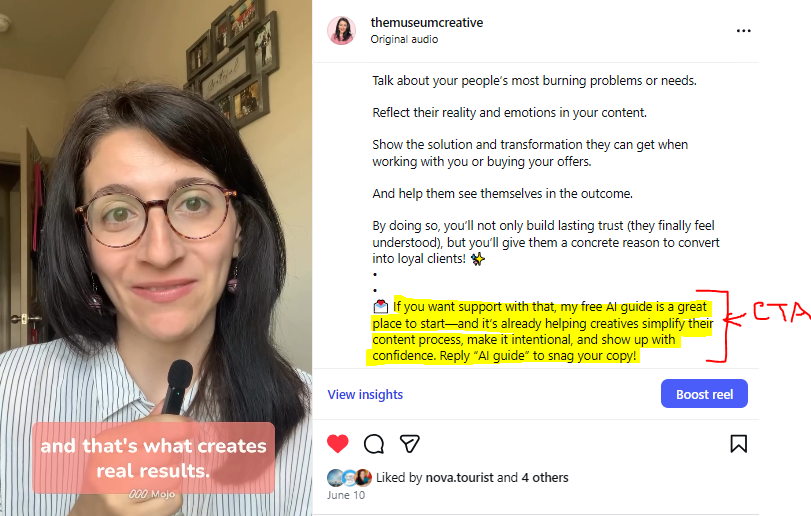
That's a seamless transition based on real support and value.
How Yearning Works With the Other SONYA Elements
Yearning doesn't work in isolation, of course.
It’s much more powerful when combined with the other parts of my framework:
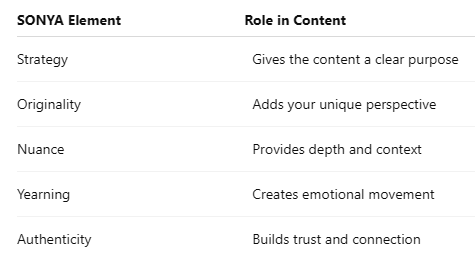
Think of it as a progression.
First, you create strategic content (also with AI help); then you make it distinctly yours by:
Adding the nuance needed to make content valuable in the real world.
Showing your audience what's possible.
Communicating all of it in a way that feels authentically human.
That's how content educates and inspires action without sounding salesy or impersonal.
A Simple Yearning Checklist
Before publishing your next content, ask yourself:
“Have I explained why this topic matters to my audience?”
“Have I shown what's possible beyond the current problem?”
“Does my audience picture themselves experiencing that transformation?”
“Am I creating anticipation without manufacturing urgency?”
“Have I included a realistic and meaningful outcome?”
“Does my CTA give readers a natural next step?”
“If AI helped me create the content, did I provide the human story and emotional context?”
If your answer is “yes” to all of these questions, your content is doing more than providing information.
It's creating emotional motion!
FAQ - Yearning in Content Marketing
What does yearning mean in content marketing?
Yearning is the moving desire for a better outcome that your content helps readers imagine.
It connects the problem your audience is experiencing with the possibility of what could change, giving them a reason to take the next step.
Is using emotion in marketing manipulative?
Not necessarily. Ethical emotional marketing helps people understand their needs and imagine realistic outcomes without using fear, deception, or artificial urgency.
The goal is to create connection and clarity—not pressure.
How can I make educational content more emotionally engaging?
After explaining the information, ask yourself why it matters and what changes for your audience if they apply what you've taught.
Show that transformation through specific examples, stories, and realistic results.
Can AI create emotionally engaging content?
AI helps structure stories, brainstorm emotional angles, and repurpose content, but the most meaningful emotional details come from your own experience and understanding of your audience. Human perspective gives AI-assisted storytelling its depth.
How does yearning help content convert?
Yearning helps bridge the gap between understanding and action.
Educational content tells your audience what they need to know. But yearning helps them understand why the outcome matters and imagine themselves experiencing it—making a relevant next step more compelling.
How does yearning fit into the SONYA Framework™?
Yearning is the fourth element of my SONYA Framework™, following Strategy, Originality, and Nuance. It helps turn useful information into emotionally resonant content that moves your audience toward action, while Authenticity (the final framework component) ensures the message is trustworthy and human.
Don't Just Educate Your Audience—Help Them Envision What's Possible
Your audience doesn't need another article telling them what they're doing wrong.
They need to understand what could change if they followed your guidance, and ultimately worked with you.
That's the power of yearning!
When you help someone imagine a future where everything’s simpler or lighter, their goals feel achievable, and their expectations are met, you're doing more than educating them.
You're giving the information purpose—without manipulative messaging, fake urgency, exaggerated promises, or aggressive sales.
You deeply understand what your audience wants, communicate a realistic transformation, and show them a path toward it.
Simple as that.
AI can help you in the process, making content creation faster and more intentional.
But never forget to weave human perspective and meaning into AI-generated content for more authentic emotional connections.
That's how you’ll deliver content that makes people naturally trust you and want more! 😉
Ready to create content that connects and converts?
If you strive to build a marketing strategy that combines human connection with the efficiency of AI, my coaching program, “Content Clarity & Flow,” is here to help!
Together, we'll create a personalized, AI-assisted marketing system that clarifies your message, helps you create content with intention, and gives you the confidence to market your creative brand without constant pressure or overwhelm.
You'll learn how to use AI as a strategic co-creator while keeping your voice, values, and human connection at the heart of your content.
Because great marketing doesn't push people into action; it inspires the right ones to take the next step.
If you’re ready, explore the full program here: “Content Clarity & Flow.”