Stop Posting Randomly: How to Create Content That Supports Your Creative Business
Ever sat down to create a social media post, only to realize you had no idea what you were trying to accomplish? 😖
Maybe you shared a behind-the-scenes photo, published your latest work, or wrote a quick caption simply because you knew you "should" post something.
A few likes trickled in, but nothing really changed.
No meaningful conversations. No new subscribers. No inquiries.
Just another post added to the endless scroll.
Frustrating, right?
Many artists, museum professionals, and creative entrepreneurs have been told that consistency is the key to success—but consistency without strategy leads to overwhelm, content fatigue, and burnout.
Which is what keeps you stuck.
The good news is there's a better way!
Today’s post will show you how to end the “content creation guesswork” step by step and build an effective strategy for your brand’s success.
And if you'd like to dive even deeper into this topic, watch my YouTube video here:

Table of Contents
Why "Just Post Consistently" Isn't Enough
"Just post consistently."
I bet you’ve heard this marketing advice often.
The problem, though, is that consistency alone doesn't guarantee results.
You can publish every day and still struggle to attract the right audience if your content lacks direction.
Without a clear purpose, you're simply creating more noise—not more impact!
Organizations with a documented content strategy are 3.5x more successful than those creating content without a plan.
Meaning: Strategy—not just frequency—is what drives meaningful results.
Posting consistently is important.
But posting intentionally makes consistency worthwhile.
What Content Strategy Really Means for Creative Entrepreneurs
When people hear the words "content strategy," they usually imagine complex spreadsheets, detailed marketing plans, or corporate jargon.

In reality, content strategy is much simpler.
It's the practice of creating every content piece with a precise intent.
Instead of "What should I post today?"
You begin asking:
“Who am I trying to help?”
“What problem does this solve?”
“How does this support my creative business?”
That's the difference between random content and purposeful content.
Whether you're writing a blog post, recording a YouTube video, sending a newsletter, or sharing on social media, each piece contributes to your larger goals and overall growth!
Strategy: The First Pillar of the SONYA Framework™
If you've been following my recent blogs, you've already been introduced to the SONYA Framework™:
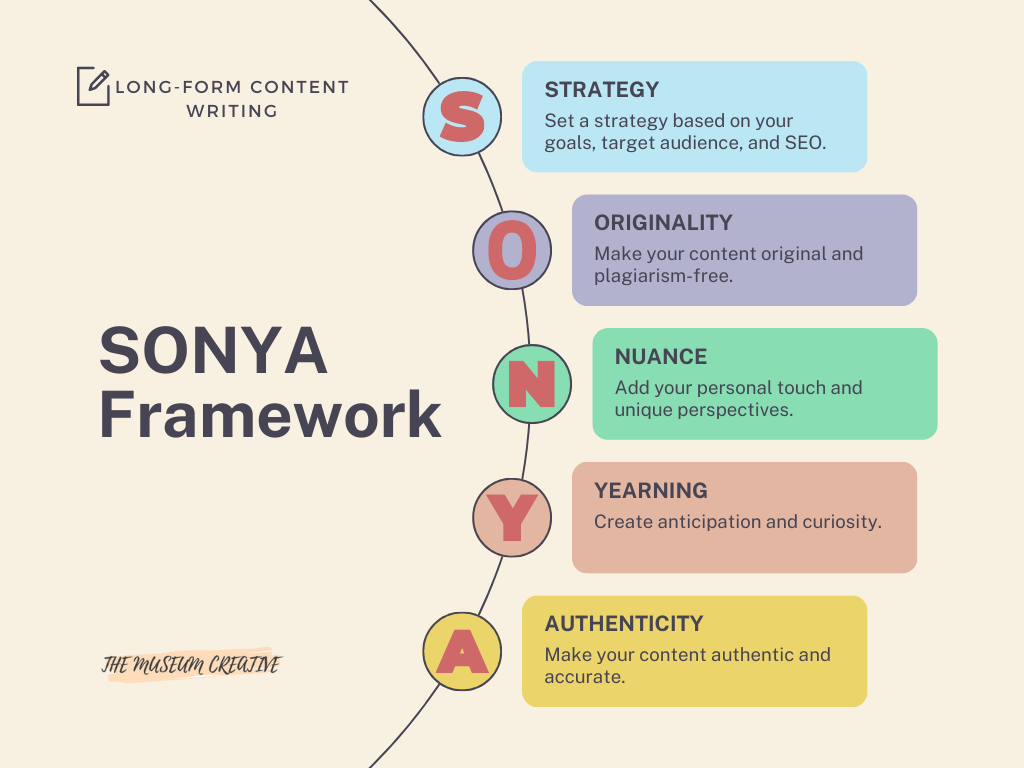
Everything begins with Strategy.
Without it, even the most beautifully written post or visually stunning Instagram carousel will fail to move your business forward.
Strategy ensures your content isn't simply filling space online—it's guiding your audience toward deeper engagement, stronger trust, and meaningful action.
Think of strategy as the key foundation that supports all the rest in your business.
The Three Questions to Ask Before Creating Any Content
Before ideating your next content piece, pause and focus on these three main questions:
1. Who is this content for?
Be specific.
Rather than saying "artists," think about the exact audience you're trying to reach.
For example:
Emerging artists building an online presence.
Small museums embracing digital technology.
Collectors passionate about vintage interior decor.
Art educators looking for audience engagement ideas.
The clearer your audience becomes, the easier it is to create helpful content they'll genuinely value.
2. What problem does this solve?
People don't search just for content.
They search for solutions.
Your audience may be wondering:
“How do I attract more art collectors?”
“Why isn't my work selling?”
“How can I increase visitor attendance to my museum?”
“How do I land more collaborations with art galleries?”
When your content answers real questions, it naturally becomes more relevant.
Google itself emphasizes the importance of creating helpful, people-first content.
Prioritizing useful information that meets people’s needs and reveals authentic expertise is the springboard to ongoing attention and trust.
3. What action should readers take next?
From there, your content should always guide readers toward a specific next step.
It might be a call to action about:
Reading another blog article.
Joining your email list.
Downloading a free guide.
Watching a YouTube video.
Booking a consultation.
Exploring your services.
Doing so will motivate your audience to stay connected with you, dive deeper into your world, and see you as a reliable resource to come back to.
An explicit invite to what’s next is crucial for your business longevity.
Without it, even the most excellent content becomes a dead end.
If you're tired of wondering what to create or how to make AI work for your marketing instead of against it, I've created a free resource to help: “5 AI-Powered Solutions for Creatives Who Dread Marketing.”
Inside, you'll discover practical ways to simplify your content creation process, brainstorm stronger ideas, and use AI strategically while keeping your authentic voice at the center of everything you create.
It's designed specifically for artists, museum professionals, and creative entrepreneurs who want more clarity and less overwhelm.
Grab your copy here: “5 AI-Powered Solutions for Creatives Who Dread Marketing.”
How to Align Your Content With Your Business Goals
Content should support both your audience and your business.
This is non-negotiable for a results-driven strategy!
Here's a simple way to think about it:
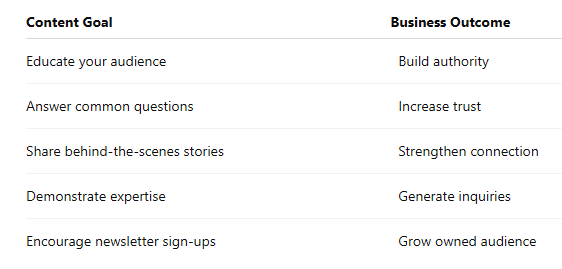
Notice something?
None of these goals involve "going viral" or “posting daily.”
Because sustainable marketing is built on genuine relationships—not fleeting attention.
And here’s the best part…
Businesses that invest in high-quality, audience-focused, SEO content see a whopping 748% median 3-year ROI in organic visibility, authority, and long-term traffic, especially when content aligns with user intent.
That’s powerful!
Where AI Fits Into Strategic Content Creation
AI has changed how many of us approach content creation. No doubt.
But strategy is still a human responsibility.
AI helps you with multiple tasks:
Brainstorm content ideas.
Generate outlines.
Organize research.
Improve readability.
Repurpose existing posts.
Suggest SEO opportunities.
But it can’t (and shouldn’t) decide your business goals, audience priorities, brand values, personal stories, and creative perspective for you.
Your expertise and ingenuity matter!
The most effective content combines AI's efficiency with your lived experience and strategic thinking.
This creates a strong synergy, where AI accelerates the process, and you provide the direction.
A Simple Strategic Content Workflow
Next time you publish something, run through this checklist first:
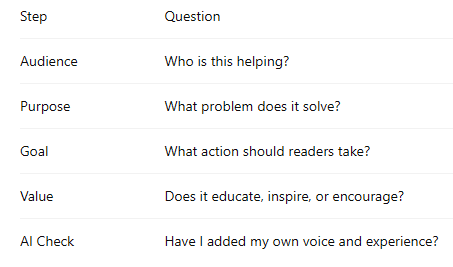
If you can confidently answer each question—well done!
You're creating content with deep intention and value, not just filling your editorial calendar with another random, pointless post.
FAQ - Content Strategy
What is a content strategy?
A content strategy is a thorough plan that ensures each content piece serves a distinct purpose.
Instead of posting randomly, you create blogs, emails, videos, or social media posts that support your business goals while meeting your audience's biggest needs.
Why isn't posting consistently enough?
Consistency is valuable, but without strategy, your content won’t resonate with the right audience or encourage meaningful action.
Strategic content builds trust, authority, and long-term relationships rather than simply increasing your posting frequency.
How do I know what content to create?
Start by identifying your audience's major questions, challenges, and goals. Then create content that educates, solves problems, and inspires them.
When your content is audience-focused, it becomes much easier to plan and produce consistently (no more guessing!).
Can AI help me develop a content strategy?
AI is an excellent tool for brainstorming, organizing ideas, and improving efficiency, but your strategy should always come from you first.
Your audience, business goals, personal experiences, and unique solutions are what give your content direction and authenticity.
How often should I review my content strategy?
It's a good idea to revisit your strategy every few months (that’s what I do to stay on track and optimize my efforts).
Reviewing your analytics, audience feedback, and business goals will ensure your content supports your growth and adapts to your audience's evolving needs.
Strategy Turns Content Into Business Growth
At this point, it should be clear as the sun…
Creating content isn’t about checking another task off your to-do list.
When every blog post, email, video, or social media update starts with strategy, marketing becomes far more purposeful—and less overwhelming!
Instead of wondering what to post next, you now know exactly who you're creating for, why it matters, and how each piece supports your larger business goals.
That's the real power of strategy.
It transforms content from something you feel obligated to produce into one of the most valuable tools for building trust, attracting your ideal audience, and growing your creative business.
Sure, consistency is still important—but without direction, it only leads to more noise.
Strategy is what gives your content meaning, momentum, and lasting impact.
So double down on that! 😉
Ready to build a content strategy that actually works?
If you're ready to stop posting randomly, simplify your marketing, and confidently use AI as part of a purposeful content strategy, I'd love to help!
My coaching program, Content Clarity & Flow, is designed specifically for artists, independent museum professionals, and creative entrepreneurs who want personalized, AI-assisted guidance to create content with greater clarity, consistency, and confidence.
Together, we'll develop a marketing system that aligns with your goals, strengthens your messaging, and helps you attract the right audience in less time and without the overwhelm.
Because great content doesn't happen by accident; it begins with a strategy!